The arsonist masquerading as peacemaker
How the U.S. sacrificed Ukraine for its own geopolitical interests
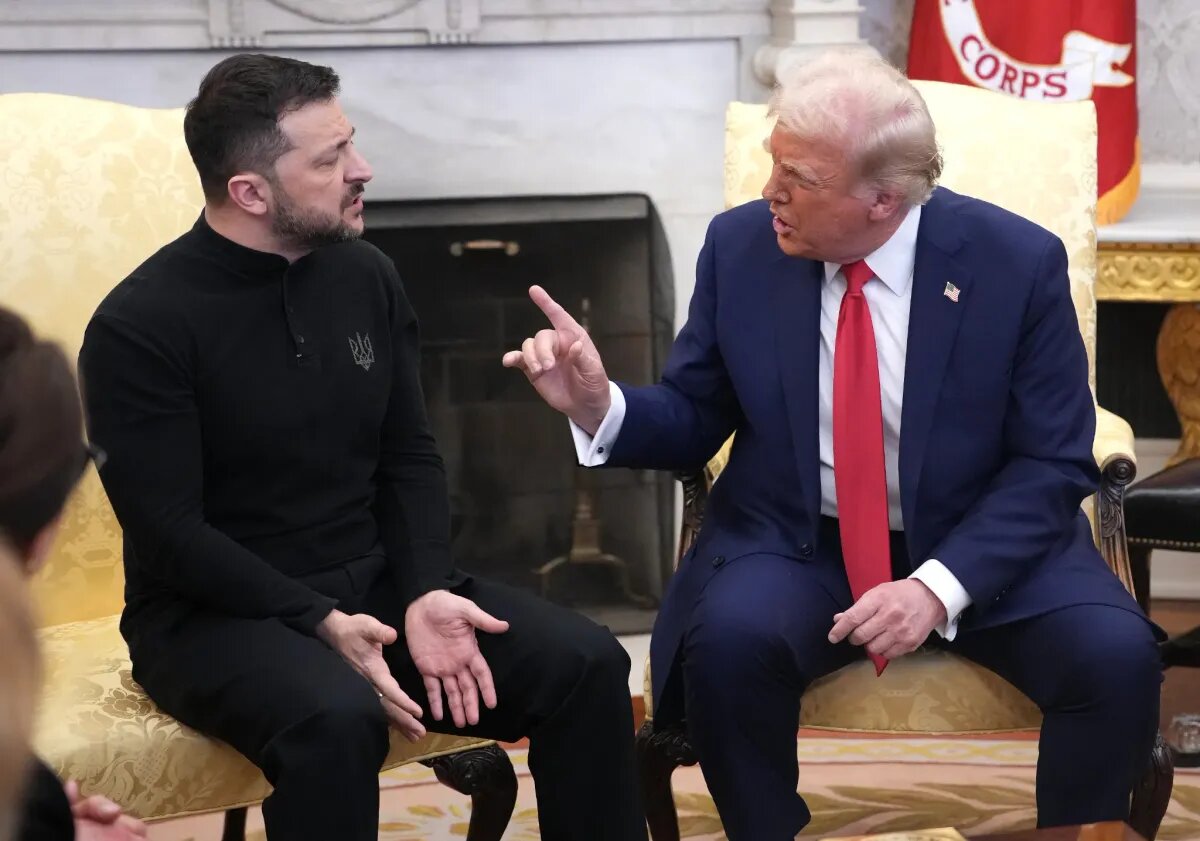
TEHRAN – The Ukraine war has evolved into one of the most intricate and tangled issues on the global stage. On one side, the Ukrainian government is beset by severe internal crises—acute manpower shortages and sprawling corruption scandals—while on the other, Russia, despite sustaining various losses and setbacks, continues to hold the clear upper hand on the battlefield.
This war also involves two other important principal actors. Europe regards this war as an existential struggle that will shape its own destiny, and it watches the unfolding events with profound anxiety and hypersensitivity.
The other actor is the United States, whose conduct has been strikingly multifaceted and at times outright contradictory.
Today, the U.S. casts itself as a mediator between the belligerents and professes a desire to end the hostilities. Yet from the very outset of the conflict, it has stood firmly beside Ukraine, furnishing massive military, intelligence, and financial assistance.
Measured against America’s deeper and more fundamental role in the genesis of this war, such aid appears almost incidental.
In reality, the United States is now attempting to extinguish a conflagration whose first sparks it deliberately struck two decades ago.
America’s expansionist agenda, expressed most concretely through NATO’s relentless eastward march, forms one of the primary root causes of the bloody clash we are witnessing.
George Kennan, the celebrated diplomat and intellectual father of the Cold War containment doctrine, warned with uncanny foresight in a 1998 New York Times interview about the inevitable consequences of NATO moving eastward: “I think it is the beginning of a new cold war. I think the Russians will gradually react quite adversely and it will affect their policies. I think it is a tragic mistake.”
In a West intoxicated by the collapse of the Eastern bloc and the triumph of unipolar hegemony, however, no one was prepared to heed such cautions.
First came Poland, the Czech Republic, and Hungary. Then the Baltic republics. Finally, Georgia and Ukraine were lined up directly on Russia’s borders.
By that point, the matter had transcended mere security concerns; it appeared the West was determined to humiliate Moscow.
Robert M. Gates, who served as secretary of defense under both George W. Bush and Barack Obama, conceded in his 2014 memoir Duty that “trying to bring Georgia and Ukraine into NATO was truly overreaching.”
America’s destructive course did not end there. In late 2013 and early 2014, Washington actively worked to overthrow the legitimately elected government in Kyiv—a government few regarded as pro-Russian and that had sought a balanced middle path, yet this proved unacceptable to the White House.
The leaked telephone conversation between Victoria Nuland, then Assistant Secretary of State, and Geoffrey Pyatt, the U.S. Ambassador in Kyiv, laid bare the extraordinary degree of American interference in the internal affairs of a sovereign state.
After Moscow annexed Crimea—employing what it termed unmarked forces—and warned that Western policies were dangerously escalating the crisis, Washington still refused to retreat.
On the contrary, first the Trump administration and then the Biden administration flooded Ukraine with weapons, authorized joint U.S.–Ukrainian military exercises, and pressed allies to incorporate Ukraine into NATO war games.
Certain analysts maintain that Western leaders deliberately and methodically engineered the conditions for war in Ukraine.
Their strategic wager, in this view, was that Russia would become bogged down in a Ukrainian quagmire and remain weakened for decades. In that grand design, Ukraine served merely as a disposable pawn.
Nearly four years after the war erupted, America continues to place its own economic and security interests above all else and remains fully prepared to sacrifice Ukraine on that altar.
The Ukrainian president himself recently spoke openly of the excruciating dilemma facing his nation: preserve national dignity or retain American backing.
We must await the outcome of this labyrinthine crisis, but one truth has already become unmistakable: even Europe—America’s oldest and most steadfast ally—now recognizes that the U.S. is no longer a dependable partner, and that the continent must learn to stand on its own feet to protect its interests and security.
Source: Sedaye Iran, the online newspaper of the Institute of the Islamic Revolution of Iran — December 4, 2025
Leave a Comment